
Air conditioning is the process of removing heat and moisture from the interior of an occupied space to improve the comfort of occupants. Air conditioning can be used in both domestic and commercial environments. This process is most commonly used to achieve a more comfortable interior environment, typically for humans
Factors affecting comfort air conditioning:
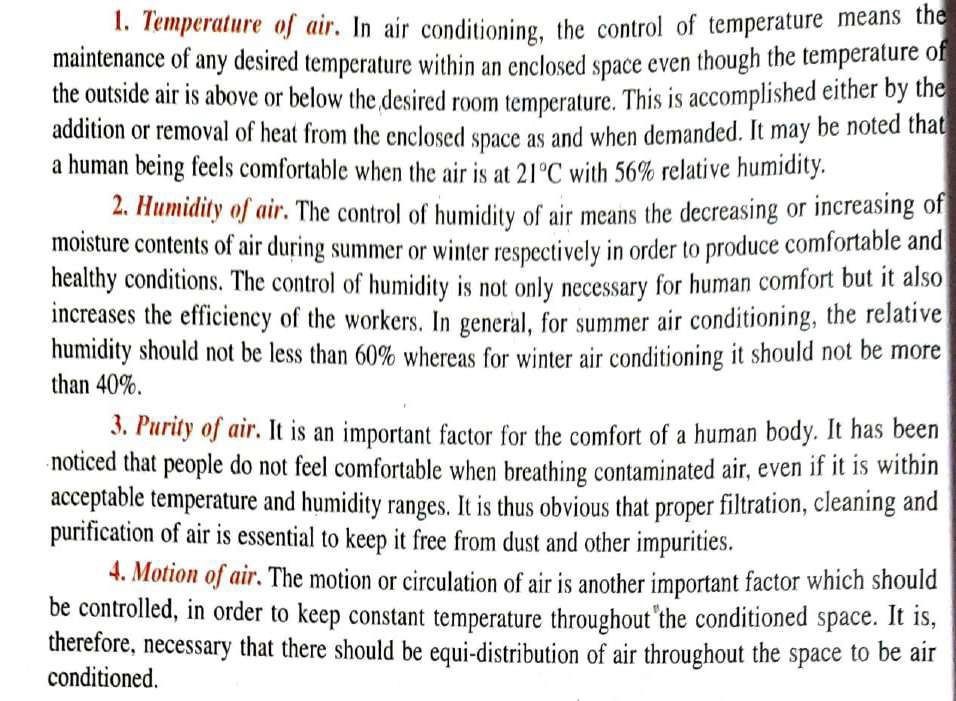
Following are the Factors affecting Comfort Air conditioning:
- Temperature
- Humidity
- Purity of air
- Motion of
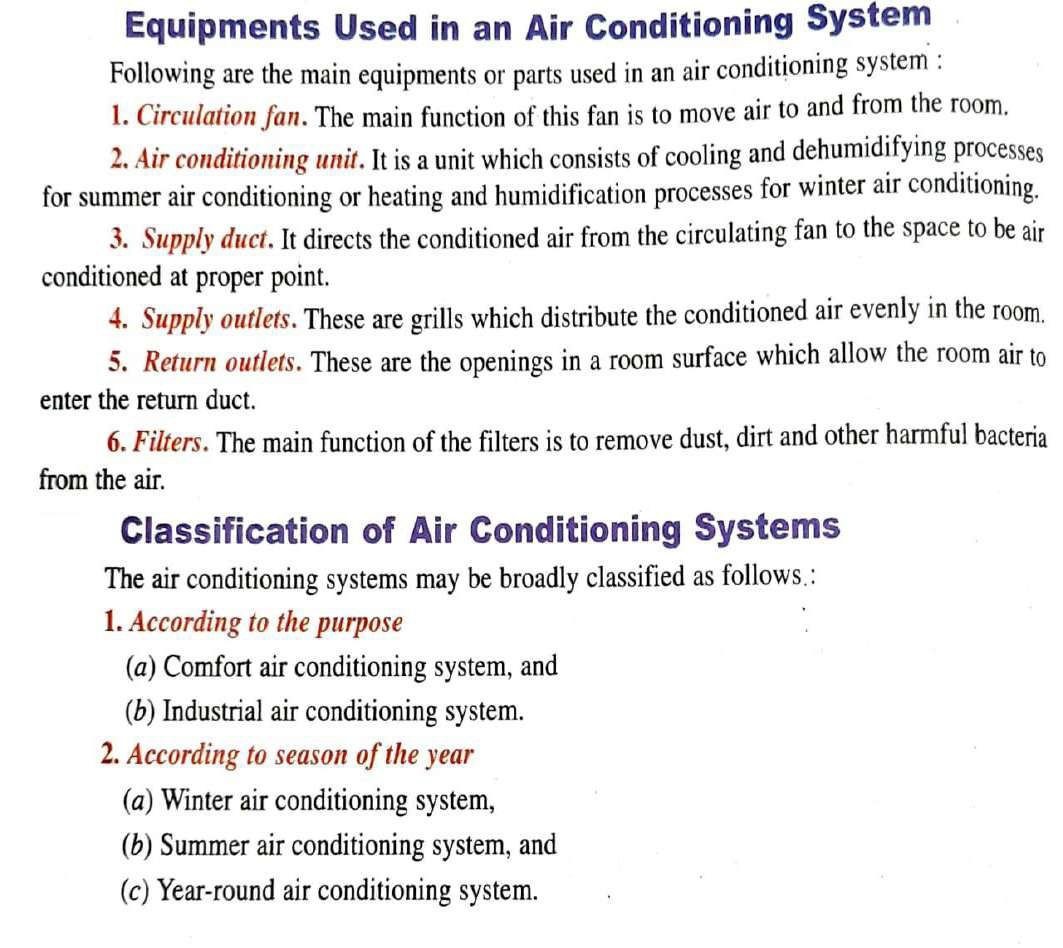
Winter Air Conditioning System:
In winter AC System, the inlet is heated by the heater, and in winter season due to less present in the air, we also need to add the moisture particle to the air, generally, a humidification system is added to maintain the moisture quantity.
Working of Winter Air Conditioning System:
In winter air conditioning, the air is heated and is accompanied by humidification.
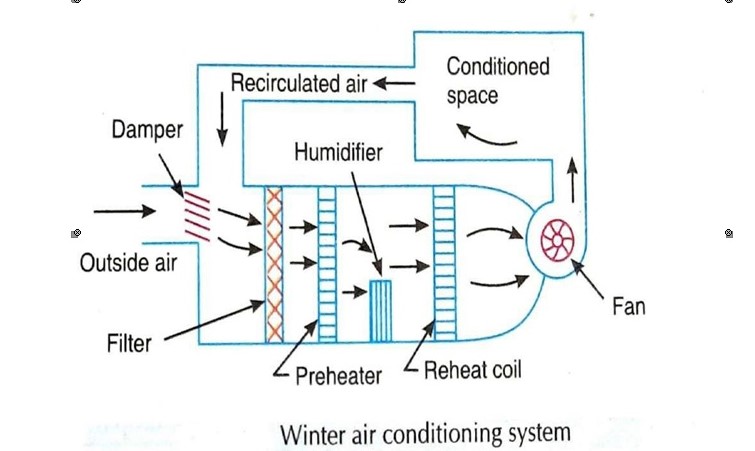
- The outside air flows through a damper and mixes up with the recirculated air which is obtained from the conditioned
- The mixture here passes through a filter to remove dirt, dust, and other
- The air now passes through a preheat coil to prevent possible freezing of water due to which dry bulb temperature increases to a very high value and the relative humidity drops to a low
- This air is being pumped into the
So, humidification of air (addition of moisture) is done and then the air is made to pass through a reheat coil to bring the air to the designed dry bulb temperature.
- Now the conditioned air is supplied to the conditioned space by mea From the conditioned space, a part of the used air is exhausted to the atmosphere by the exhaust fans or ventilators.
The remaining part of the air known as recirculated air is again conditioned
- Initially, the relative humidity is 60% in the winter season, so to reduce it, a process of reheating is done where it is reduced to 20%.
So it is again humidified due to which it reaches a point of 80% or 100% RH where the DBT is very low.
So in order to get the desired dry bulb temperature, again the process of reheating is done where the desired percentage 40% RH is also obtained.
- A damper is used in order to control the area and have an intake of the required amount of
Summer Air Conditioning System:
Initially, during summer, the dry bulb temperature is high and the relative humidity of air is low.
Relative humidity should not be less than 60% according to the comfort conditions for summer air conditioning.
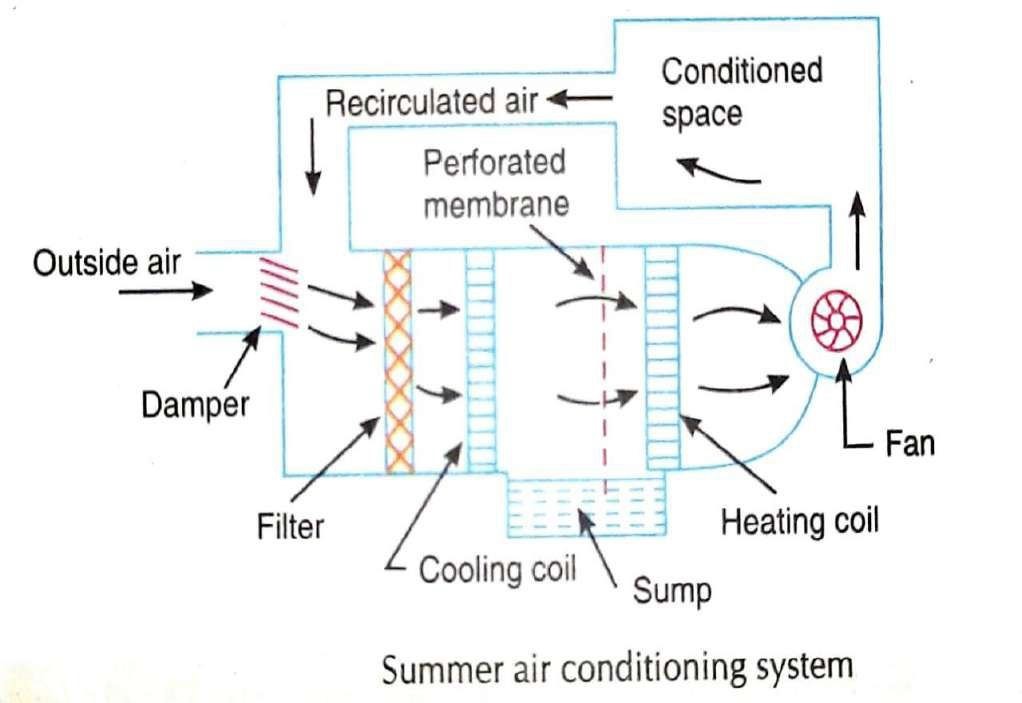
Working of Summer air conditioning system:
- The outside air(atmospheric air) flows through the air filter to remove impurities or dust particles present in the The air now passes through a cooling coil.
- The coil has a temperature much below the required dry bulb temperature of the air and very high relative humidity in the conditioned So the cooled air is pumped into a dehumidifier, where it loses its moisture in the conditioned space.
- After that, the air is made to pass through a heating coil which heats the air. This is done to bring the air to the designed DBT and relative humidity(RH).
- Now the conditioned air is supplied to the conditioned space by a.
- From the conditioned space, a part of the used air is exhausted to the atmosphere by the exhaust fans or ventilators. The remaining part of the used air is again conditioned.
- The outside air is sucked and it is made to mix with the recirculated air to make up for the loss of conditioned air through exhaust fans or ventilation from the conditioned